When the Ground Won’t Sit Still
Article
Frost Heave, Thawing Permafrost, and the Risks They Introduce to Infrastructure
In Alaska, the ground isn’t a fixed base. It rises, softens, and settles with the seasons. What looks stable on the surface often isn’t, and that reality shows up in ways most teams recognize—a winter hump in the road, a fence post that leans a little more each spring, or a slab that gradually shifts out of level.
Frost heave and permafrost degradation are baseline conditions across much of Alaska. Projects tend to perform better when teams assume movement from the start, measure it, and design around it rather than reacting after it appears.
What’s Happening Beneath the Surface
Frost heave begins as the ground freezes from the top down. Water migrates toward that freezing front and forms ice lenses, which expand and lift the surrounding soil. When cold temperatures, available water, and frost-susceptible soils align, the ground will move. The more important detail is how much movement a specific site will experience.
As temperatures rise, the surface thaws while deeper layers can remain frozen, trapping water and temporarily reducing soil strength. That’s when settlement becomes visible—pavement dips, shallow foundations tilt, and utilities shift out of alignment.
Why Spring Conditions Can Matter More Than Winter
Winter tends to draw attention, but spring is often where most of the damage occurs. As soils thaw from the top down, released water collects in layers that cannot yet drain. Those saturated soils are still expected to carry loads, particularly in transportation systems, leading to rutting, depressions, and seasonal load restrictions.
Around facilities, the pattern plays out differently but with the same cause. Movement that begins during freezing becomes more apparent during breakup, when uneven settlement starts to affect structural performance. If something looks worse in the spring, it usually reflects a real loss of strength in the system.
How Permafrost Changes the Equation
Permafrost introduces a different kind of risk. When it remains frozen, it can provide stable support. When permafrost begins to thaw, it can lose volume and strength, leading to settlement and long-term structural issues.
Designing in these conditions typically comes down to a clear choice: maintain frozen ground or design systems that tolerate thaw. That decision drives the use of insulation, thermosyphons, air convection embankments, or deeper foundation systems—and increasingly requires looking beyond current conditions to how the ground may behave over time.
Why Surface Conditions Can Be Misleading
One common challenge in land development is misjudging soil conditions based on appearance. A site may look like clean, stable gravel but still contain enough fine material to behave as frost-susceptible soil. That small difference can allow moisture movement and lead to seasonal weakening under load.
These issues are rarely obvious until movement begins. In practice, this often shows up as recurring road repairs in the same location each spring or foundations that require repeated leveling adjustments. By that point, the cost and complexity of addressing them have already increased.
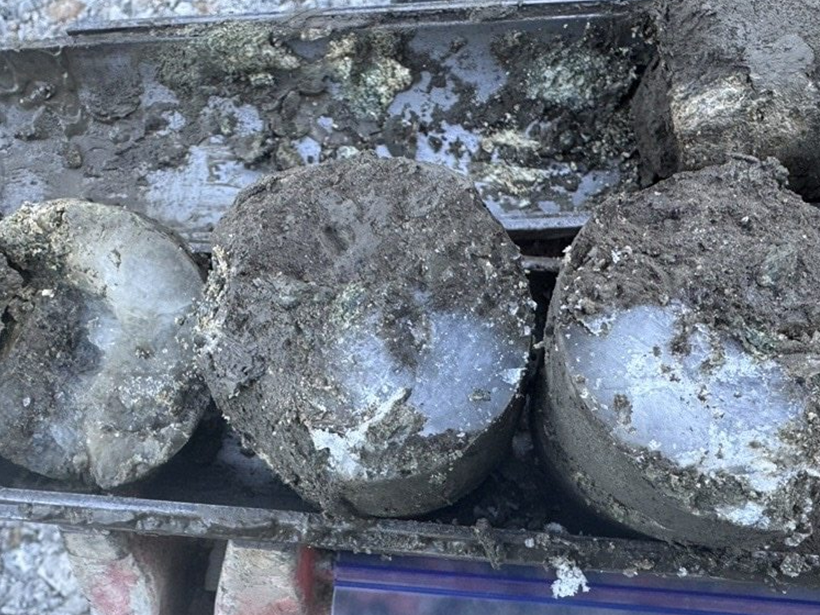
Early subsurface investigation—through drilling or test pits—helps shift decisions from assumptions to verified conditions.
What Effective Approaches Have in Common
Projects that perform well in these environments tend to focus on fundamentals. That starts with understanding what the ground is doing at a given site and confirming soil type, moisture conditions, and the presence of permafrost.
From there, the most reliable solutions center on controlling water through drainage and grading, specifying non-frost-susceptible materials, selecting foundation systems that tolerate movement, and incorporating thermal design where temperature affects performance. In practice, that often involves geotechnical investigation, foundation design, and thermal considerations to account for changing ground conditions over time.
What Recurring Movement Is Telling You
Repeated, seasonal movement is often treated as a maintenance issue, but it usually points to something more fundamental. When the same humps, cracks, or shifts appear year after year, they reflect underlying conditions that haven’t been addressed.
Those patterns provide useful information. They show where water is moving, where soils are weakening, and how the system responds to seasonal changes. Left unaddressed, they tend to progress from minor seasonal movement into recurring repairs, increasing maintenance costs, operational disruptions, and, in some cases, safety risks. Acting early is usually the difference between a targeted fix and a larger, more expensive correction.
If you’re seeing the same movement each season, planning new infrastructure in frost-susceptible soils, or dealing with recurring spring maintenance, it’s usually a sign the underlying conditions aren’t fully understood. At that point, it’s worth taking a closer look below the surface before the next cycle turns a manageable issue into a larger repair.
Where This Leaves Project Teams
Frost heave and permafrost degradation are part of the operating environment in Alaska and similar regions. Especially in permafrost regions, the question isn’t whether the ground will move, but whether designs account for that movement.
Starting with subsurface conditions, planning for water during breakup, and designing systems that tolerate change tend to lead to better long-term outcomes. These considerations shape how infrastructure performs over its life.
At RESPEC, that work typically starts with a focused look at site conditions—often a targeted subsurface investigation to confirm soil behavior, moisture content, and permafrost presence. From there, we help clients determine what’s driving movement and whether the right path is monitoring, localized fixes, or design changes that address the issue.
If you’re dealing with recurring movement or planning work in frost-susceptible conditions, a quick review of site conditions can help clarify the next step before the next seasonal cycle.
Quick Checklist
- Look for repeatable, seasonal patterns: the same humps, cracks, tilt, or ponding that come back each winter/spring
- Document it early: photos from the same viewpoints each season, dates/weather, rough extents, and any operational impacts (plowing issues, speed reductions, standing water)
- Assume water is part of the problem: drainage, grading, and non-frost-susceptible materials often matter more than adding “strength” on top
- Verify what’s in the ground: small amounts of silt/clay can turn “good-looking” gravel into frost-susceptible soil
- Plan for breakup: spring thaw can be the weakest window for roads, runways, and shallow foundations, even if winter performance looked fine
- Loop in the right people with the right info: maintenance history, as-builts/materials, known utilities, timing of movement, and any prior subsurface logs
- Understand permafrost : if permafrost may be present, treat temperature as a design variable (insulation/air convection embankments/thermosyphons) and track it when feasible
Need a second look? We can help evaluate conditions and prioritize next steps before small shifts become expensive repairs.
Related Content
Where Bold Ideas Meet Arctic Reality
Article
Furnace and Boiler Maintenance in Alaska
Article
RESPEC Infrastructure Solutions Newsletter – Summer 2024
Newsletter