A Rapid Rebuild for Ridgway Diversion
Projects
Client
Town of Ridgway
Timeline
2025
Location
Ridgway, Colorado
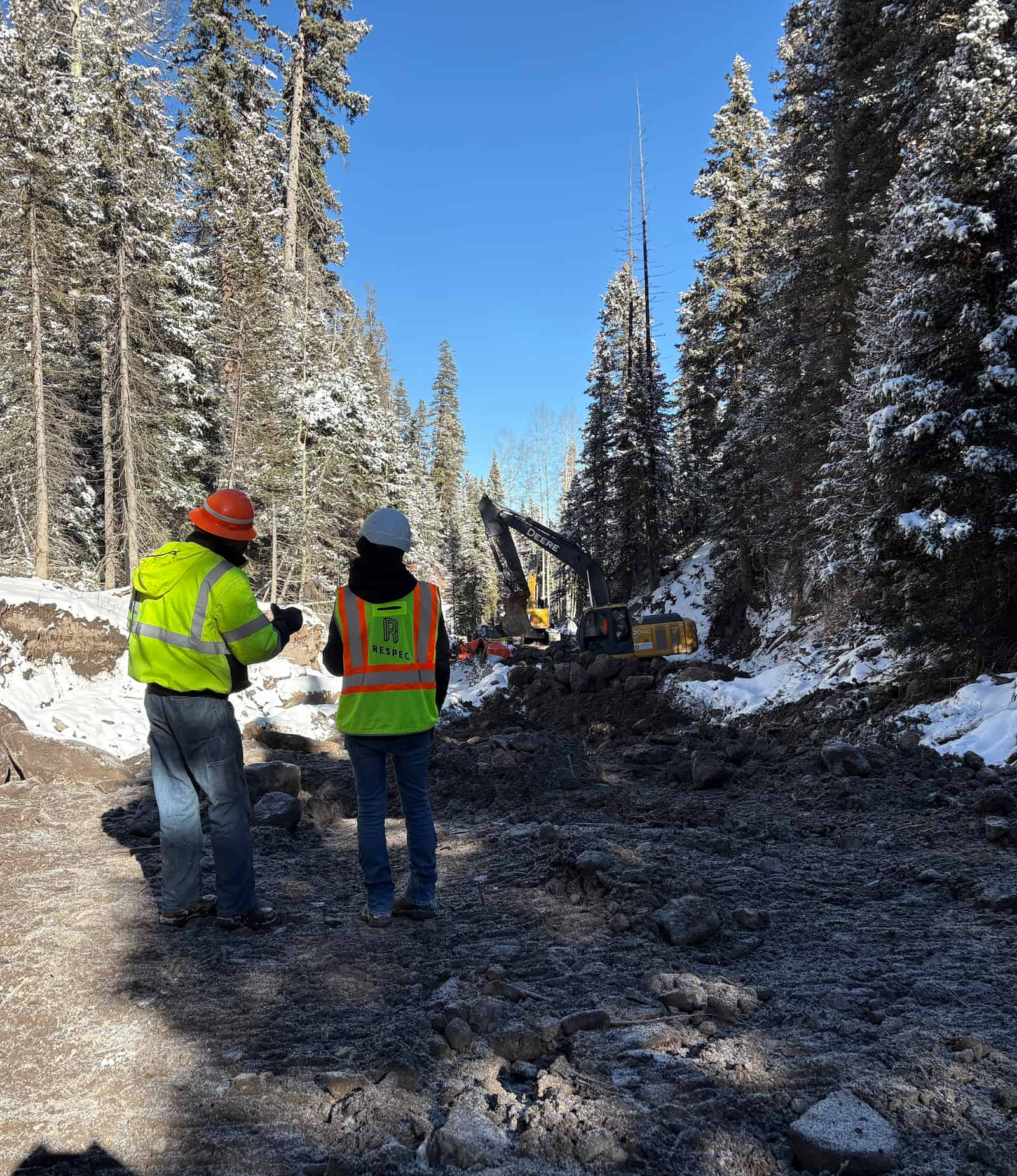
Replacing Critical Water Infrastructure on an Extreme Schedule at 9,300 Feet
When There’s No Time for Typical Engineering
An August 2024 flood destroyed Ridgway’s raw water diversion structure, leaving the town without its primary water source. The community secured Natural Resources Conservation Service (NRCS) grant funding and needed a replacement designed and construction-ready by August 2025—a timeline that collapsed standard engineering processes into 5 months.
RESPEC faced a compounding set of constraints: design the structure at a 9,300-foot elevation, 2 miles up a private access road, without detailed topography data, geotechnical information, or the ability to bring concrete trucks to the remote site.
The team started conceptual design using 10-foot contour LiDAR data before obtaining actual survey information in early May. Working with the Construction Manager at Risk (CMAR) method beginning in May, the team’s design adapted to what one local precaster could produce in limited form sizes because no feasible cast-in-place concrete was possible, given road limitations and batch plants more than 60 miles away.
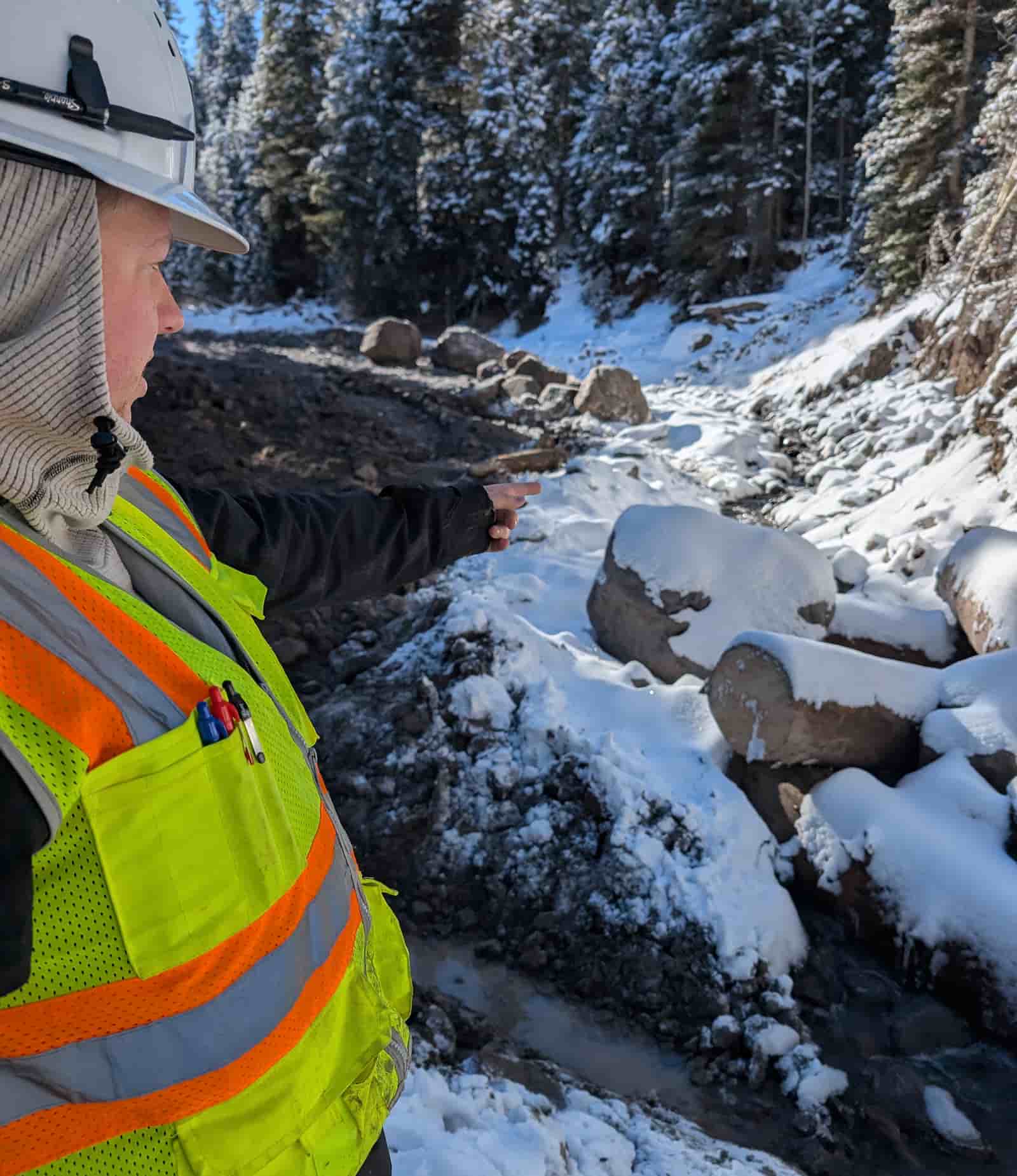
The stream itself remained unstable just 1 year post-flood, with mobile bed conditions and vertical cut banks requiring geomorphic analysis to determine where and how to anchor a permanent structure in a shifting channel. We used stream restoration techniques to manage stream movement.
Buy America, Build America Act requirements complicated material and equipment sourcing on an already tight schedule. The team secured U.S. Army Corps of Engineers Clean Water Act Section 404 permits, coordinated with the water commissioner, and negotiated private property access, all while ensuring the town could continue diverting water through temporary facilities during construction.
The design shifted from the original diversion structure’s open graded box and ditch to a closed-piped system with a Coanda screen to address post-flood sediment challenges. The structure was substantially complete by mid-December.
Engineering Under Pressure
The project delivered a functioning water supply under extreme constraints, demonstrating how collaborative delivery methods and adaptive problem-solving can overcome the absence of standard design information when communities can’t wait.